Grande-Synthe
2028
Arts Practice Building
Contracting owner: Ville de Grande-Synthe
Cost of work: 4 565 000 € H.T
Floor area: 1746 m² + 1707 m² ext
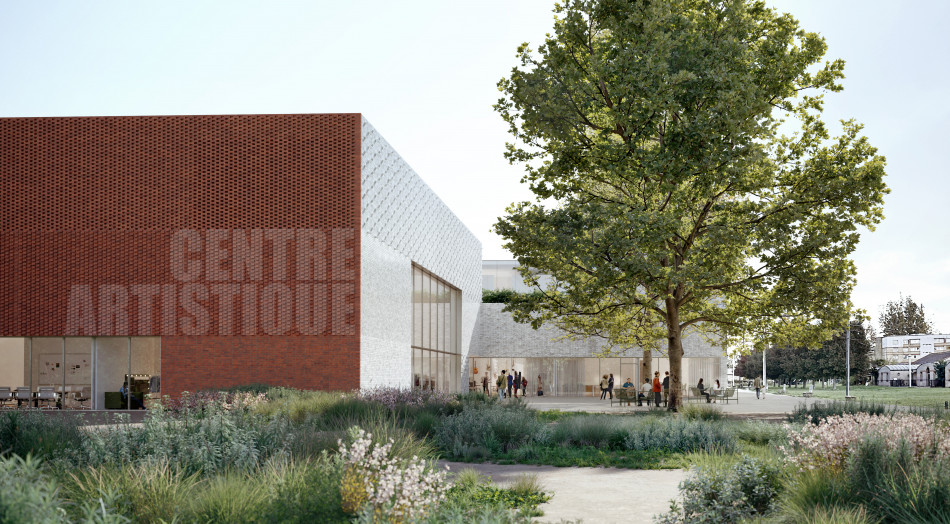
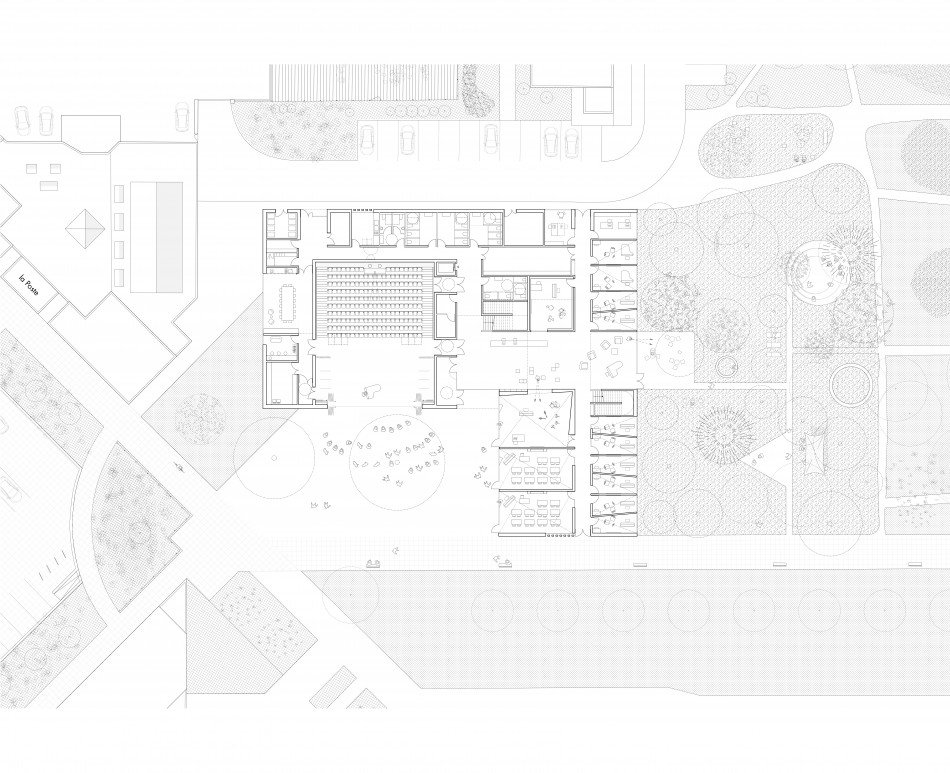
For us, it was obvious: the public space had to be organized around the site’s two remarkable plane trees. We propose creating a true plaza—a unifying space where people will enjoy gathering. Here, the architecture will define the public space.
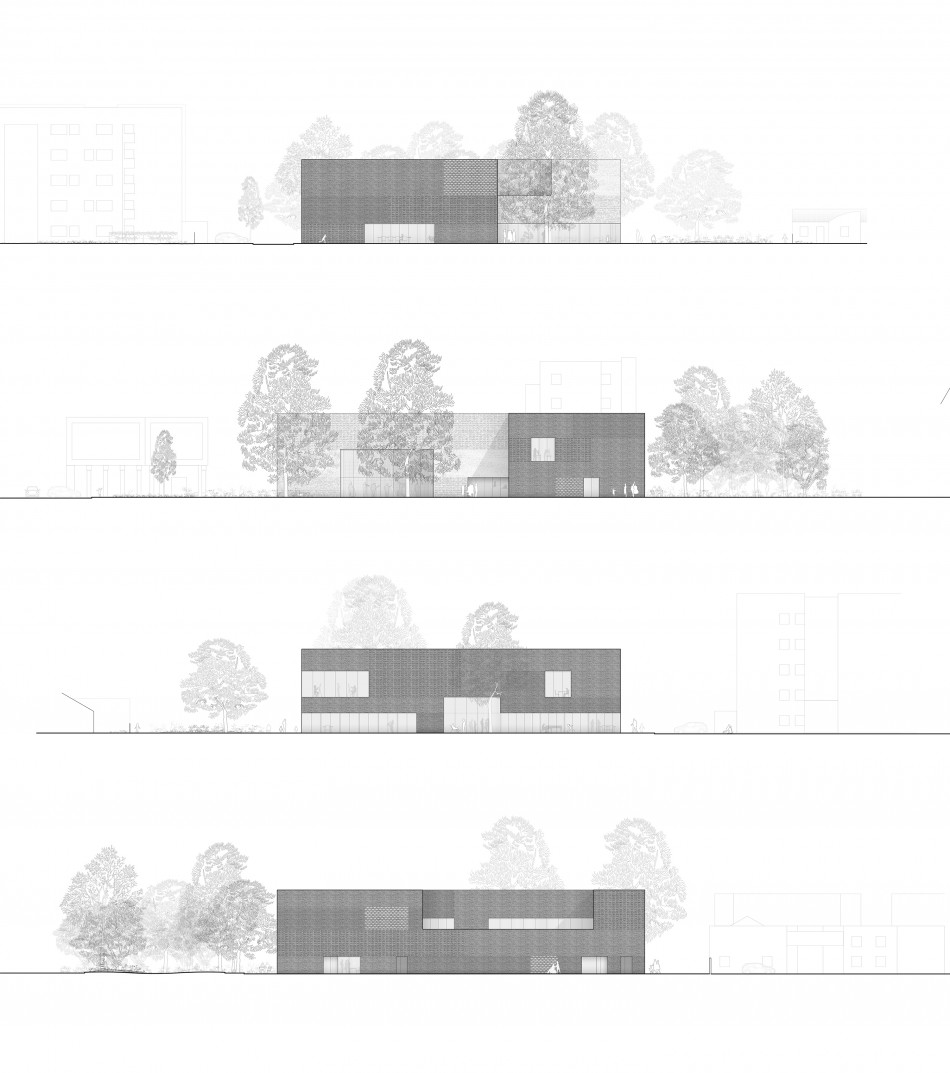
An “L”-shaped layout and brick facades naturally emerged as the best way to structure this gathering place, reveal its potential, and establish a dialogue with the neighboring buildings. Contemporary moldings were incorporated to echo the surrounding structures.
The recessed facade, which invites people into the plaza, is constructed of white brick and thus clearly marks the entrance to the facility. The various brick textures—matte, glazed, and embossed—serve as a playground for the shadows cast by the trees, which bring the facade to life throughout the day.
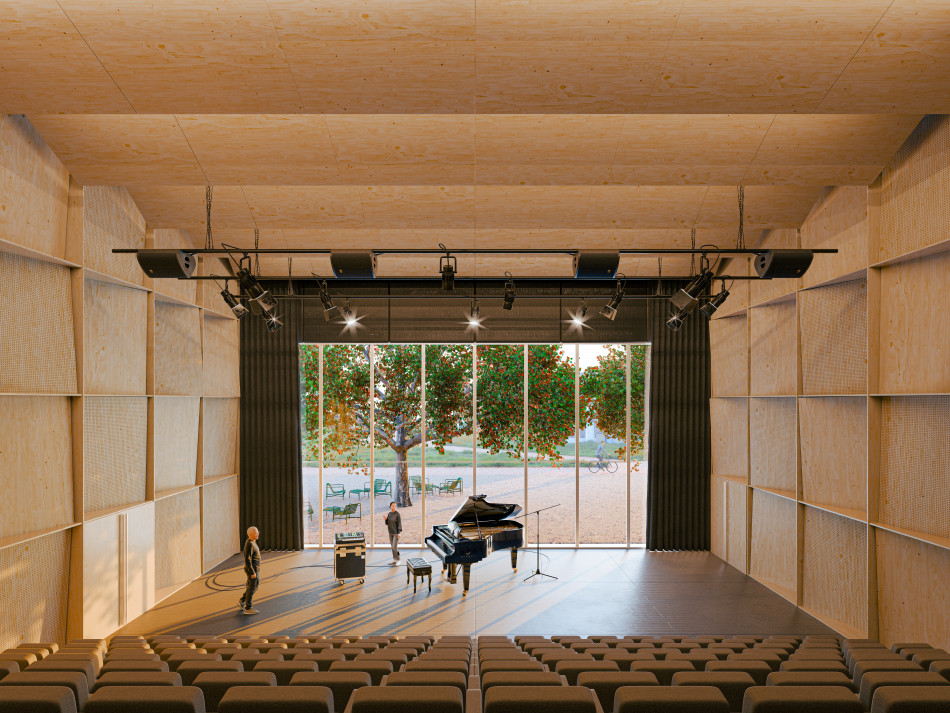
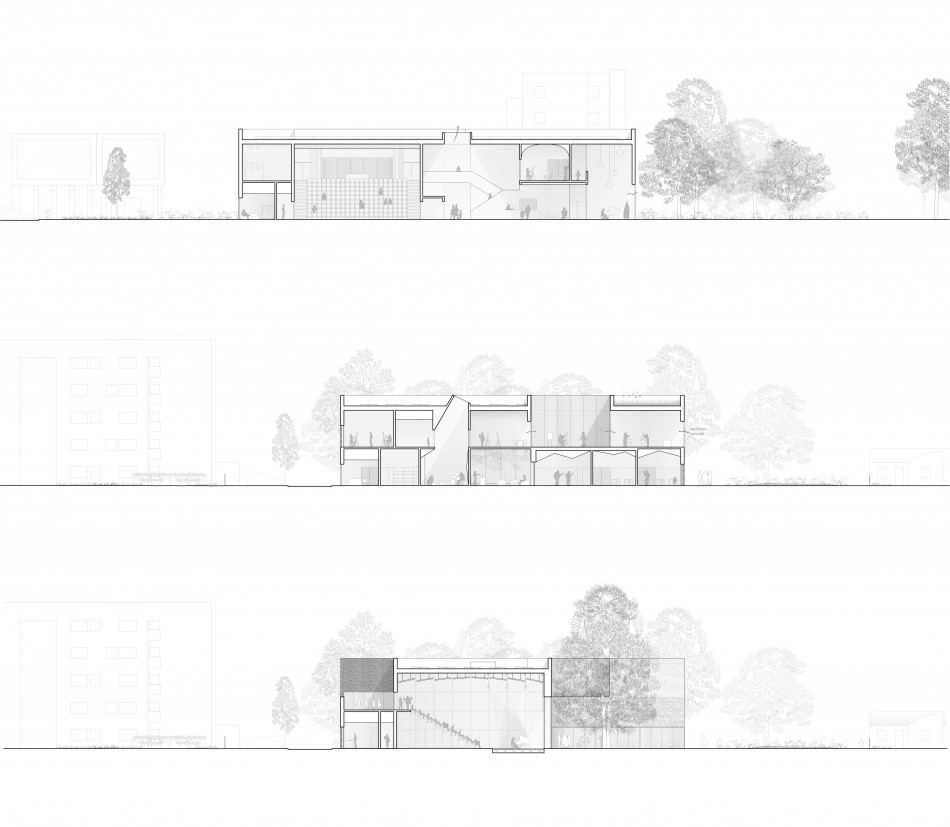
Inside, we felt it was essential to position the auditorium—the program’s centerpiece—just right. We designed it to be reversible, meaning it can open onto the plaza during the warmer months. This design will make it possible to host unique events such as concerts and outdoor movie screenings, among many others. It was conceived as a musical instrument in its own right: its geometry and wooden panels allow sound to diffuse evenly and controlled, providing acoustics equally suited to music and theater.
The music rooms are naturally located on the ground floor. This solution seemed more convenient to us for moving instruments and made more sense given the proximity to the auditorium. The practice rooms open onto the small forest we propose to plant, while the large halls overlook the plaza. The percussion room, located at the heart of the building, features a double-height ceiling for acoustic reasons. Every effort has been made to provide the best possible teaching conditions: lighting, sound quality, and user comfort.
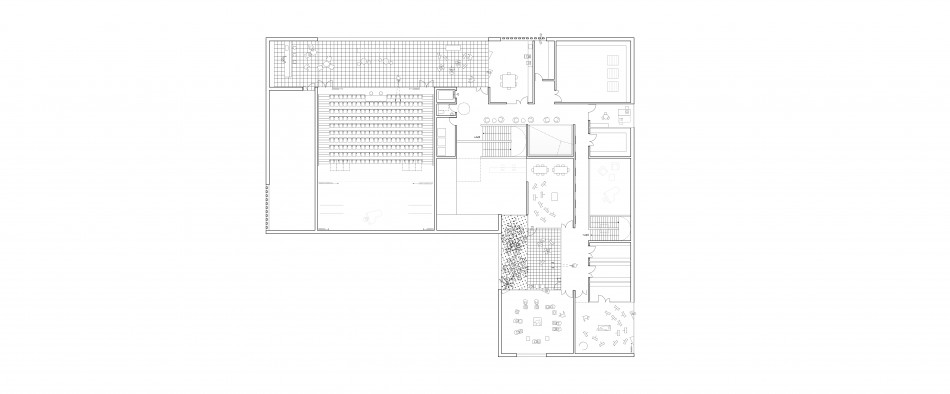
We have placed the visual arts studios on the upper floor. They have direct access to the outdoor terraces, allowing students to work outdoors when necessary. The upstairs rooms are all different, unlike those on the ground floor, and their varied orientations and views give each one its own distinct identity.
The large terrace will feature a summer bar. Since the upper section of the auditorium opens onto the terrace, it will be possible—after a lecture or concert—to enjoy a moment of socializing that extends the event. This terrace thus serves a dual purpose: as a source of light and as a place for people to come together. The small wooded area to the east also helps create spaces conducive to outdoor activities. Thanks to specially designed clearings, it will be possible to play music there, hold outdoor classes, or organize activities in the heart of nature.
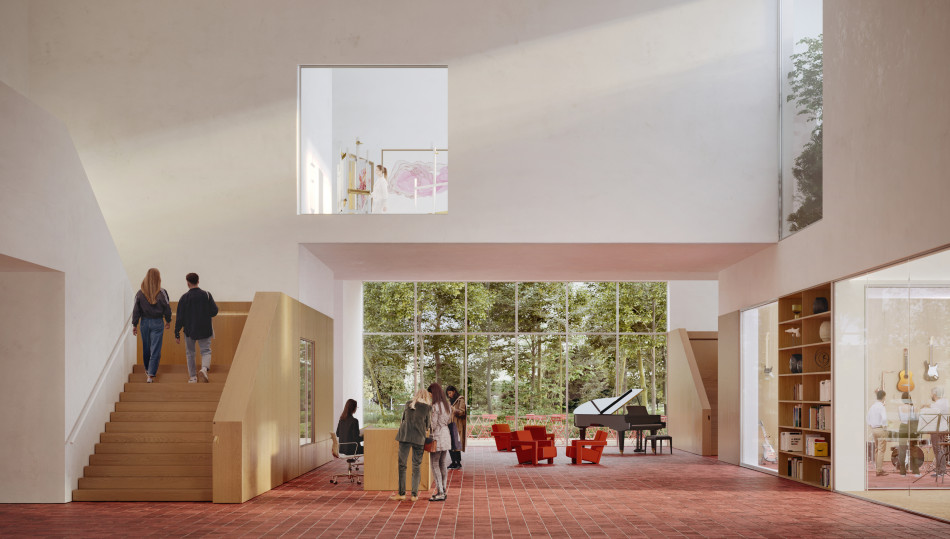
But what unites all these spaces is, of course, the lobby. We wanted it to be spacious, open, and airy. Its double-height ceilings create visual connections: from there, you can see the contemporary music room and the percussion room, as well as the visual arts room located upstairs. It also boasts unobstructed views of the forest, which lend it a unique and special atmosphere that few lobbies possess. It is a space ideal for exhibitions, gatherings, and discovery. It is the heart of the building: we designed it to be a calming and welcoming place.
Every effort has been made to inspire people to get involved and to build bridges between different artistic activities. The approach to this virtuous, positive-energy project goes far beyond the technical and architectural realms. Our goal here is to build a place that radiates energy—a generous space that speaks to the entire community, a place that transcends its programmatic limits and serves culture and local life.
We want to create a space that brings generations together—a vibrant, open space that feels intuitive both to its regular users and to those discovering it from the outside.